Dermendzhieva, S. (2019). Studying the welfare of children at an early age in the system of institutional care, International Journal of Cognitive Research in Science, Engineering and Education (IJCRSEE), 7(1), 95-119
Dr. Sofiya Dermendzhieva, South-West University “Neofit Rilski” - Blagoevgrad, Bulgaria
E-mail: sofger@swu.bg
Original Research
Received: March, 03.2019.
Revised: March, 28.2019.
Accepted: April, 09.2019.
doi:10.5937/ijcrsee1901095D
UDK
373.2(497.2)
159.922.7
Abstract. This article discusses the need to develop a unified vision and strategy for enhancing the welfare of children at an early age in the institutional care system in Bulgaria. The methodological basis for the research is the “Quality Framework for Early Childhood Services” (QFECS) of the International Association Step-by-Step (ISSA). A diagnostic tool was developed that explores the guiding principles of good practices in nine different priority areas in three distinct groups in Bulgaria. It analyzes the state of early care and identifies the resources that ensure the quality of services during early childhood.
Keywords:
welfare,
early childhood,
institutional care,
quality of services in nurseries.
As a matter of fact, the nurseries are defined as organizationally separate structures in which medical and other specialists carry out raising, educating and training children from three months to three years of age. In recent years, this definition has lost its relevance, given the results of early childhood and care research. The arguments in this regard are the research and the assertion of the role of prenatal development and the ever-increasing tendency that “the modern family, not only in an economic but also in a deep spiritual crisis, needs both socio-economic and professional - psychological support “ (Tasevska, 2008: 12).
Contemporary research confirms that the child’s future development is the first 1000 days of his life. According to their research relevance and relevance, actions are under way in Bulgaria aimed at:
- reassessing the status of crèches, respectively, of crèches in the system of institutional care;
- improving public services for early childhood development;
- clarifying the role of the institutions in developing a unified vision and strategy for improving the well-being of children at an early age;
- implementing cross-sectoral cooperation with a view to achieving a broad consensus on the implementation of a more integrated approach;
- approach in children’s policies during this period.
An important input in this direction is the initiative of the ISSA, which develops and implements the “Quality Framework for Early Childhood Services” (QFECS).
The present study analyzes the achieved results and the effects of the “Quality Framework for Early Childhood Services” (QFECS) in three distinct groups of United Children’s Establishments in Bulgaria.
The “Quality Framework for Early Childhood Services” (QFECS) is based on the vision of the ISSA for a society in which families, communities and experts work together to enable each child to develop their full- potential.
The framework outlines the guiding principles of good practice in Nine different priority areas and details the indicators that describe ways to effectively implement them.
Its development is in line with other international frameworks and opinions, of which more important are:
- Early Childhood Education and Care (ECEC, 2014);
- Review of Policies and Practices for Monitoring and Quality Assessment of Early Learning and Development in Strong Start III (OECD, 2012);
- Early childhood education and care: to provide all children with the best start in life for tomorrow’s world (EC—European Commission. 2011);
- Documents from UNESCO and UNICEF.
According to experts in the field of European early-school policy, the proposal to create a national pedagogical framework covering the period from birth to the start of schooling is characterized by high innovation and prospect, given the opportunity to provide “more effective management of the targeted system of social care in early and preschool age” (Mihova, 2012: 126).
Exploring the European standards to-wards children, Kaleynska in cludes the child welfare among the basic children’s rights to be guaranteed by the Union policies (Kaleynska, 2014:125).
At a conceptual level, the Framework introduces new approaches to fostering care and well-being in early childhood, and focuses on updating policies on early childhood development.
At the instrumental level, its significance is expressed in the definition of Nine priority areas, the deployment of which ensures the parity of meeting the needs of all stakeholders: children, families and professionals in specialized institutions.
Recognizing the special needs of children from the birth to the age of three, the ISSA formulates specific principles and indicators in delivering high quality services to children of the elderly.
The framework contains potential in the context of the modern sustainable development paradigm, as it implies the idea that “education should not only be life-wide but also diversified, and learning intensively integrated into all major activities of life“ (Dyankova, 2018a: 96). Detailed detailing of the principles characterizing the individual priority areas reflects the RCDC’s potential for measuring the quality of services in early childhood.
At an applied level, the effectiveness of the Framework is contained in the substantiated description of specific indicators for recognizing the principles that basically define childcare at an early age.
Outlined practical expedience makes the Framework a reliable indicative tool, tracking logical consistency in identifying the results and effects of its application in social and institutional practices.
The research program has been deployed in four stages:
First stage: information, during which the following activities were carried out:
- meeting with the clergy teams of three clerical groups from the “Zvenche” Kindergarten and Kindergarten “Zname na mira”, Vratsa and presenting the goals of the study;
- Establishing a timetable for conducting trainings with participants for the implementation of the “Quality Framework for Early Childhood Services” in the Task Force;
- Establishment of a timetable for visitor group visits for the purpose of monitoring and evaluating childcare provision at an early age after the training provided;
- Validation of the Early Childhood Quality Assessment tools: Monitoring Surveillance Daily of the Monitoring Expert and “Self-Assessment Daily Report” of the Jaslite Team Specialists.
Stage Two: A training course in which cluster specialists are involved in training modules.
Content-based trainings present the guiding principles of good practice in Nine Different Priority Areas for Quality of Service in Early Childhood and detail the ways for their effective implementation.
Third stage: approbing, in which the actual monitoring and assessment of the well-being of the children at an early age is carried out in accordance with the principles and priorities of the Framework.
Stage four: Final, analyzing the results and effects of RACC implementation.
The analysis of the results and the evaluation of the effects is based on the data processing of the two main instruments:
- “Daily Surveillance Report”, completed by the expert in the monitoring of the groups after the training;
- “Daily self-assessment report” after the training, reflecting the reflexion of the cluster teams on the guiding principles and ways to apply best practices in the 9 priority areas of the “Quality Framework for Early Childhood Services” (QFECS).
In substance, the described tools are identical, allowing their results to be compared and analyzed.
According to modern researchers, the observed correlations and discrepancies in the percentage ratio of the marked statements take into account trends typical of such studies:
- self-evaluation is a process in which the subjects unconsciously choose those degrees in the stated statements that rather reflect their “desirable” behavior;
- Surveillance is a process in which subjects dominate their focus on FACTS, reflecting difficulties in implementing “expectant” behavior (Dyankova, 2018b: 11).
Conditional compliance with these two trends is in the direction of subsequent analysis.
The Pilot Implementation of a “Quality Framework for Early Childhood Services” in three distinct groups in the municipality of Vratsa examines the state of early childhood care.
The focus of the study is defined in the principles and indicators of Nine priority areas.
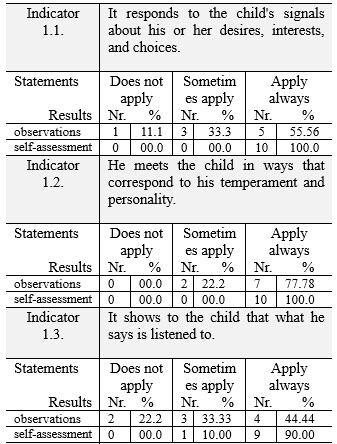
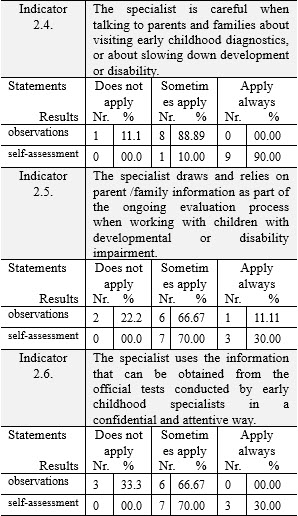
The tables contain the quantitative values and percentage equivalents of the results of “Daily report self-assessment” of the members of the creche teams and “Daily report for observation” carried out by the expert monitoring.
Their discussion builds on the indicators that reveal the extent of resource outcomes that ensure the quality of services in early childhood.
Table 1. Principle 1: Relationship with each child recognizes and values its uniqueness, competencies, personal style of communication, preferences and opinion.
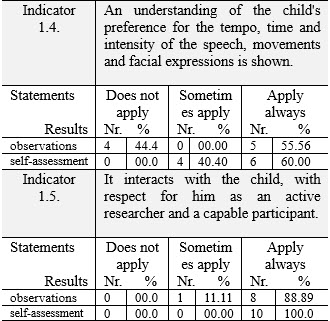
Table 2. Principle 2: Relationships are deepened by interactions that create a strong attachment.
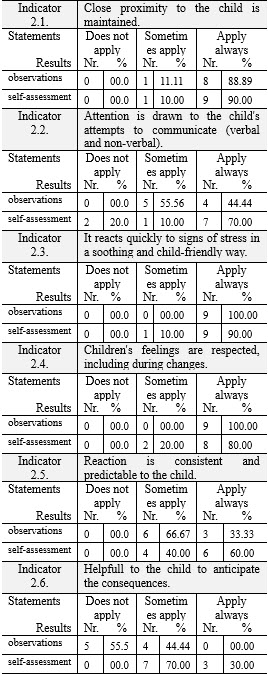
Table 3. Principle 3: Relationships are promoted through strategies that promote dialogue.
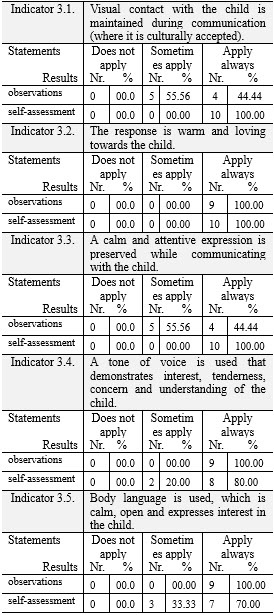
Table 4. Principle 4: Relationships between the children themselves are stimulated.
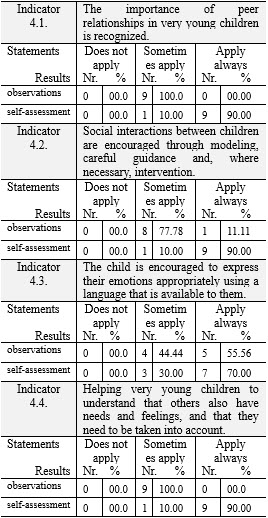
Table 5. Principle 5: Relationships support / facilitate children under the age of three in changing their day-to-day and extraordinary activities.
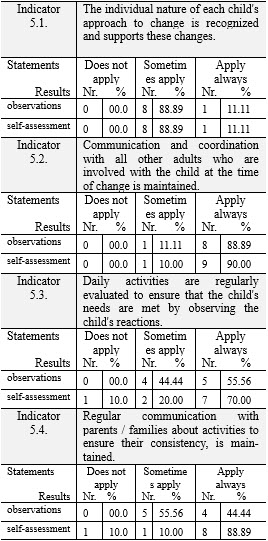
Table 6. Principle 1: Knowing and respecting families and communities affirms their relationship with them and between them.
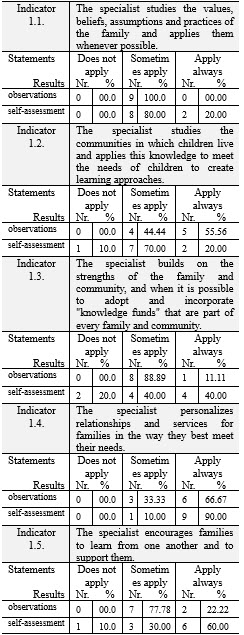
Table 7. Principle 2: Sensitive, respectful and equal communication with families supports the development and learning of children.
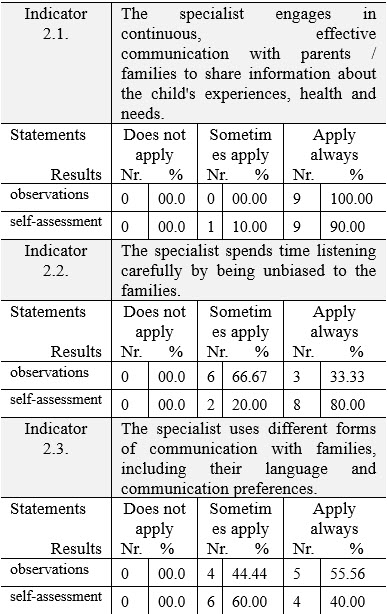
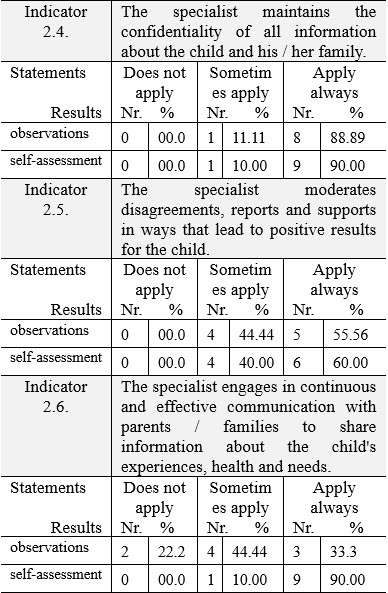
Table 8. Principle 3: Services are best provided in partnership with the family.
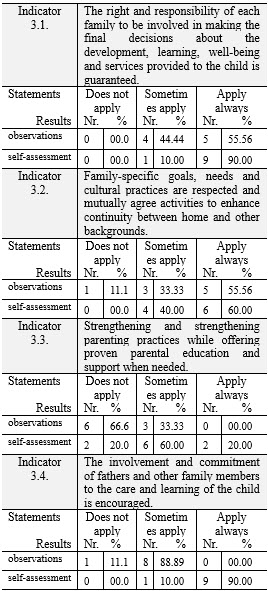
Table 9. Principle 4: Partnerships based on co-operative and community-based cooperation best support families and children.
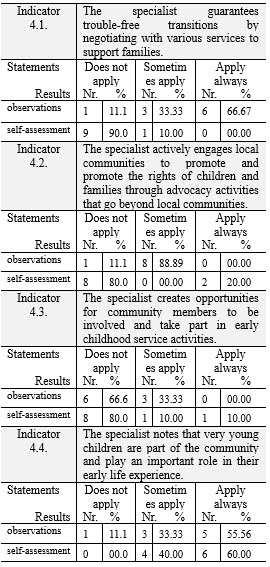
Table 10. Principle 1: Inclusion provides equal opportunities for each child and family to participate regardless of gender, race, ethnic origin, culture, mother tongue, religion, family structure, social status, age or special needs.
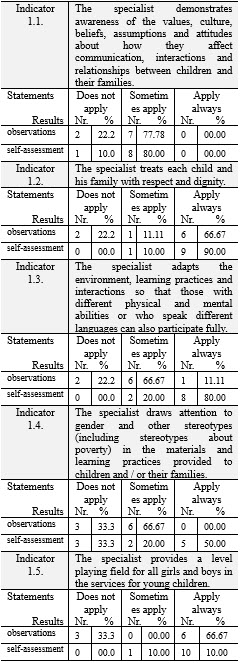
Table 11. Principle 2: Understanding and appreciating the diversity that exists among children, families and communities builds childhood identities.
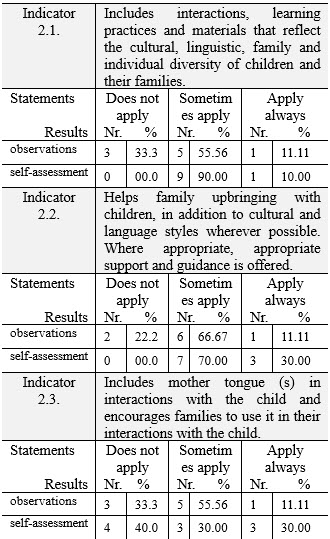
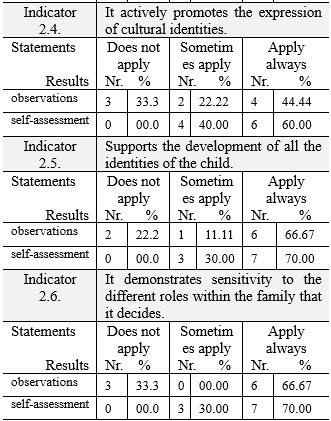
Table 12. Principle 3: Promoting the sense of individuality, opinion and decisions of each child, motivating democratic values and practices.
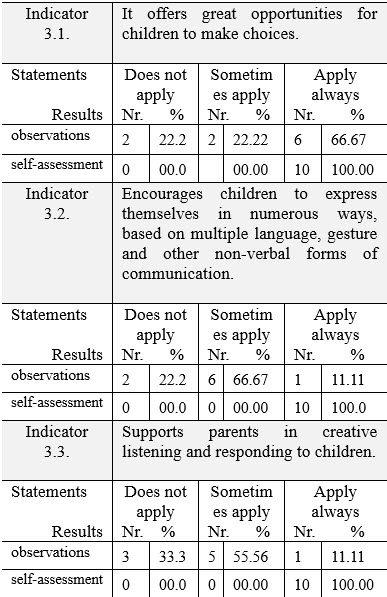
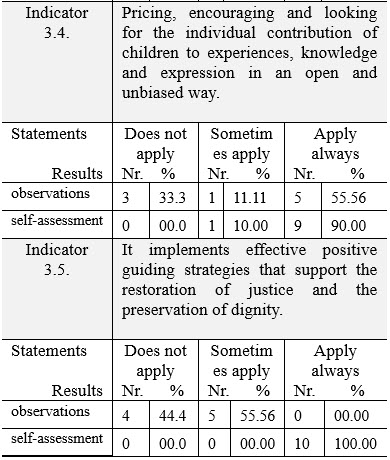
Table 13. Principle 4: Inclusion is promoted through partnerships with families.
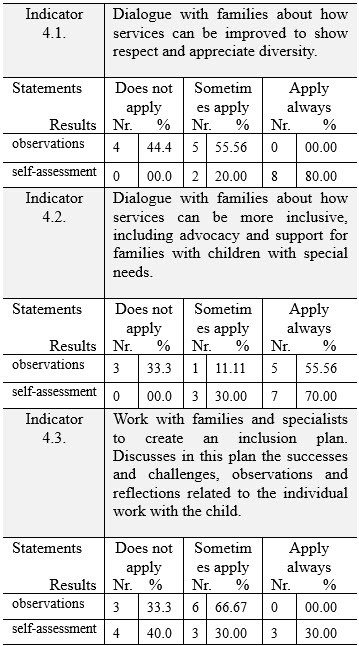
Table 14. Principle 1: Every child’s health is encouraged.
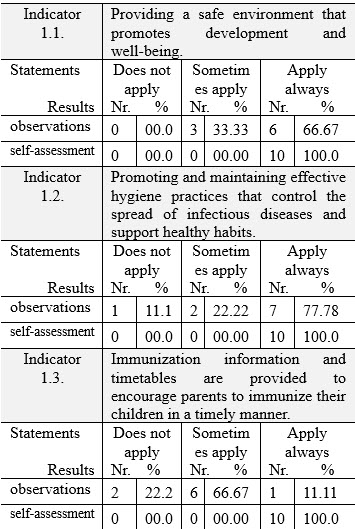
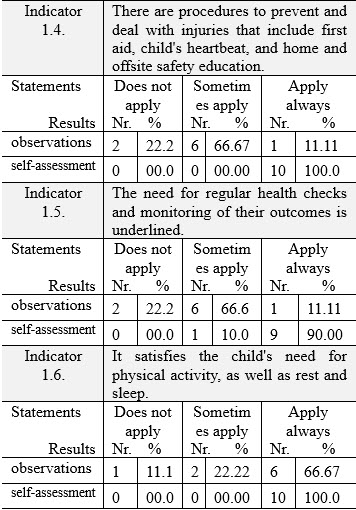
Table 15. Principle 2: Meeting the nutritional needs of the child.
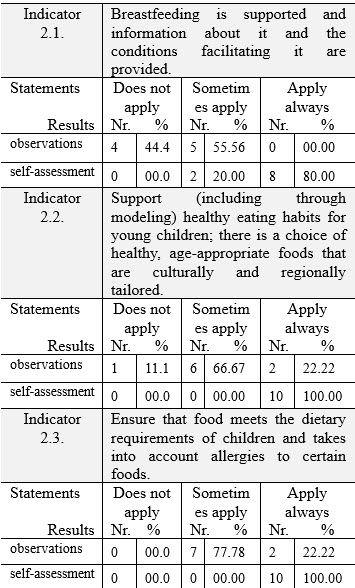
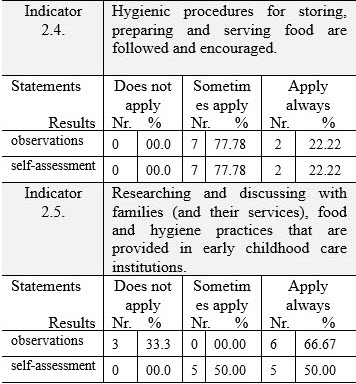
Table 16. Principle 3: Health care and nutrition are a source of pleasure and effection.
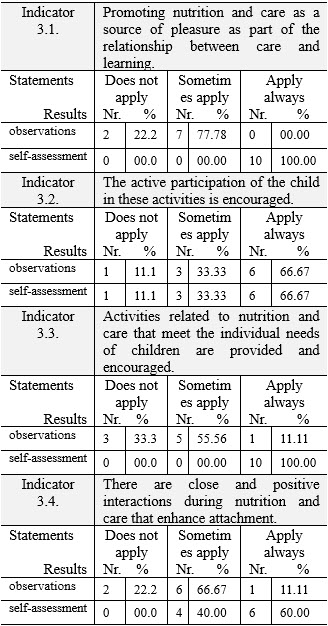
Table 17. Principle 4: Every child is protected from violence, lack of care and injury by promoting appropriate practices, prevention and intervention.
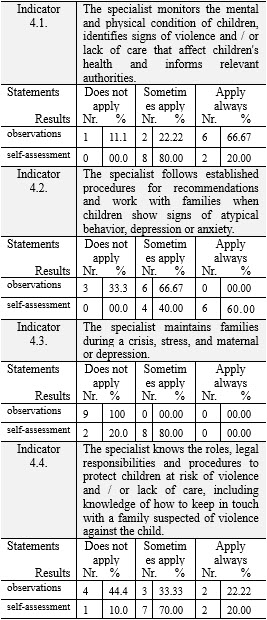
Table 18. Principle 1: The development of children is holistically approached.
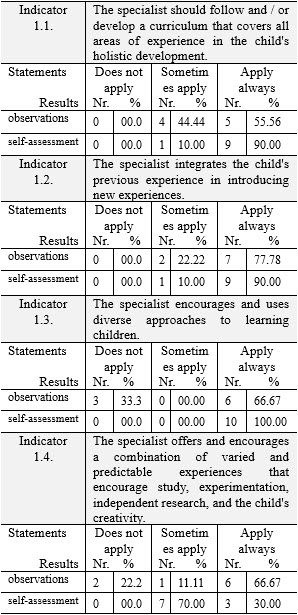
Table 19. Principle 2: Care is seen as an opportunity for development and learning.
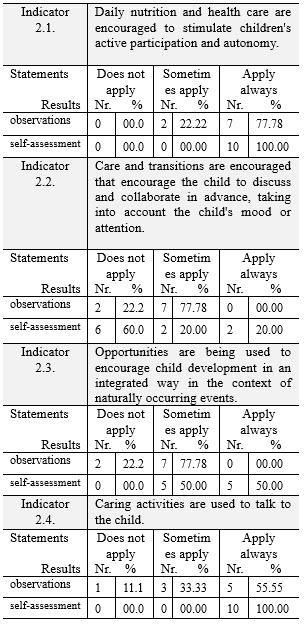
Table 20. Principle 3: Play is a source and strategy for development, well-being and learning.
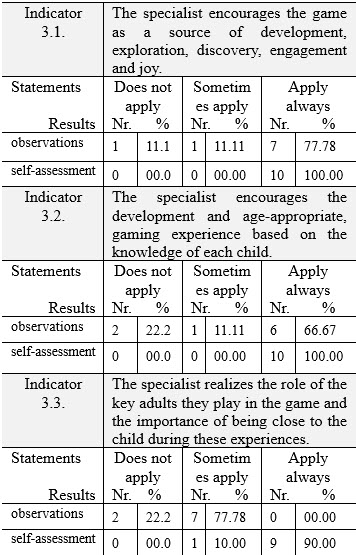
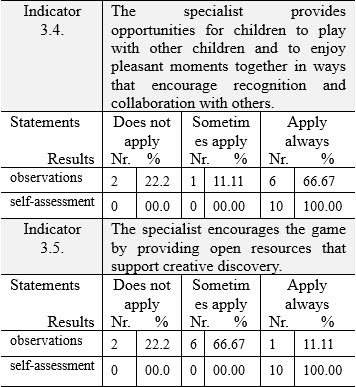
Table 21. Principle 4: Development and learning is promoted through support.
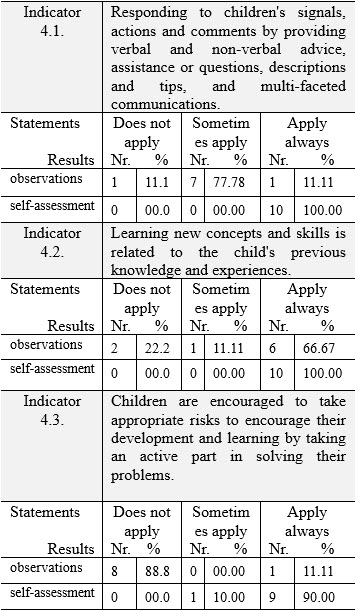
Table 22. Principle 1: Monitoring provides important information about child development, learning, interests, strengths and needs.
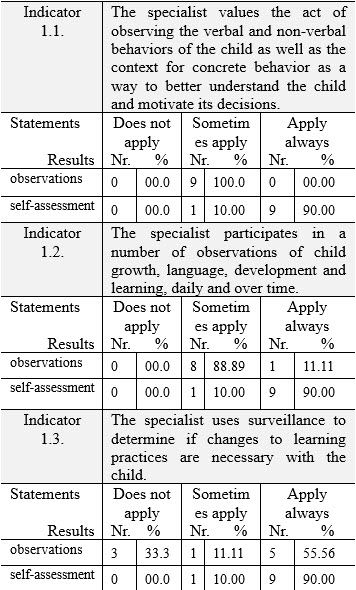
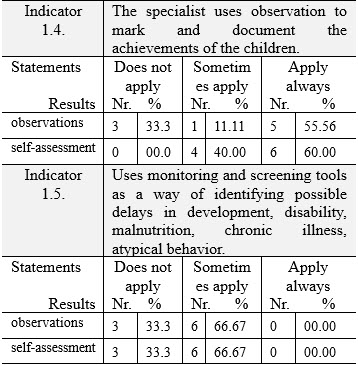
Table 23. Principle 2: Monitoring is most useful when documenting, analyzing and sharing with parents / families and other people involved in the care and well-being of the child.
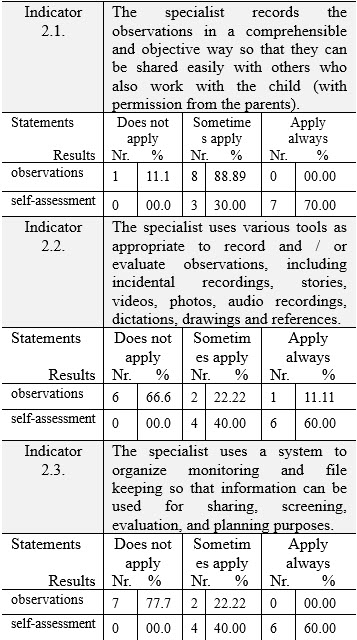
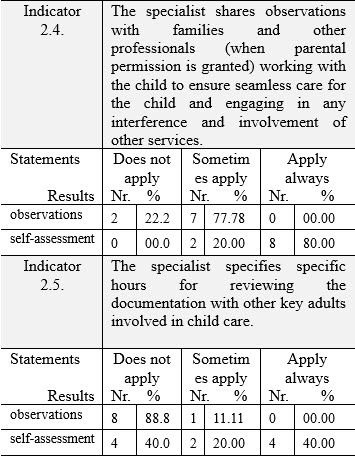
Table 24. Principle 3: The joint discussion of children’s observations and the documentation of their learning and socialization experiences motivates the review of professional practices and their future improvement.
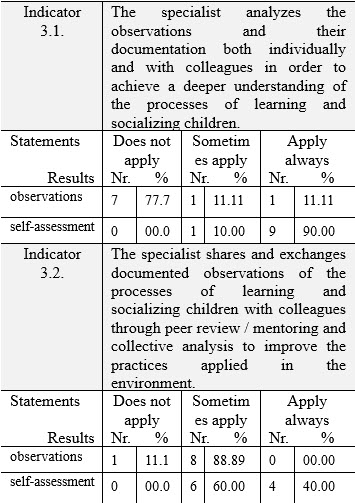
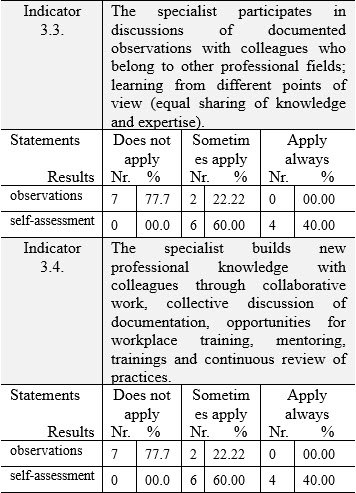
Table 25. Principle 4: Long-term and short-term planning is based on individual children’s strengths and needs.
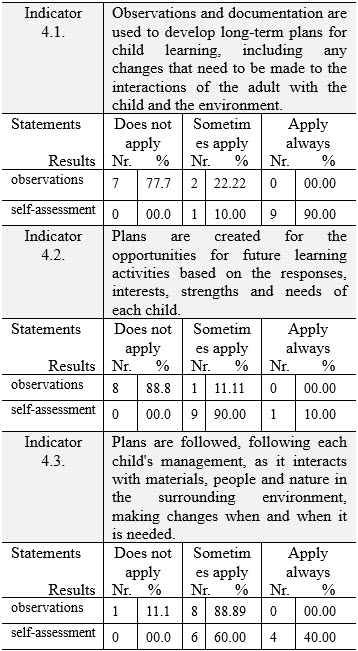
Table 26. Principle 1: The environment encourages the emotional well-being of each child.
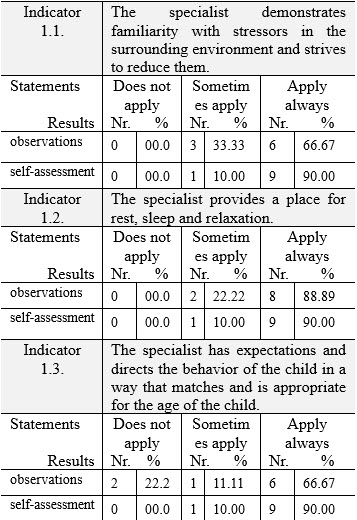
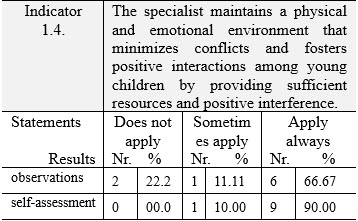
Table 27. Principle 2: The environment is safe, clean and free from all contamination and controlled.
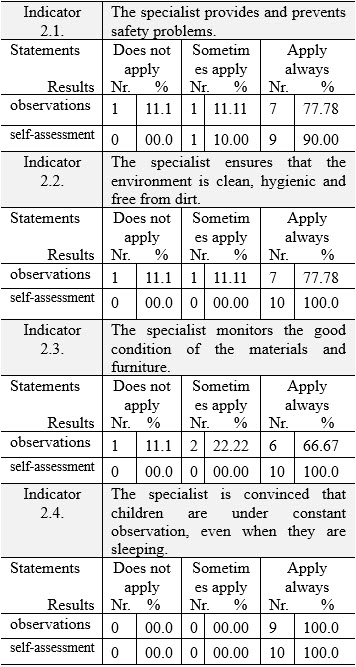
Table 28. Principle 3: The environment is hospitable, accessible and comfortable.
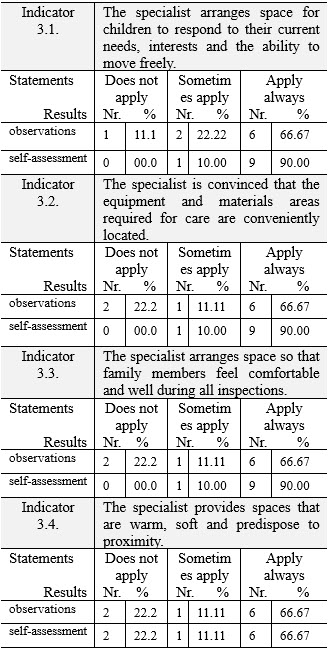
Table 29. Principle 4: The environment stimulates children’s play, discovery, independence and initiative.
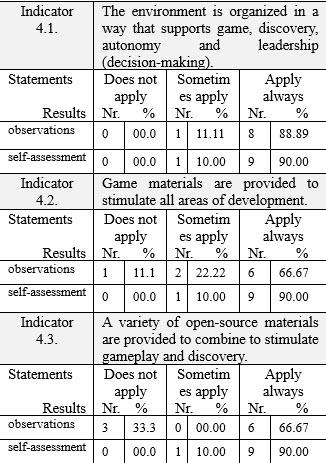
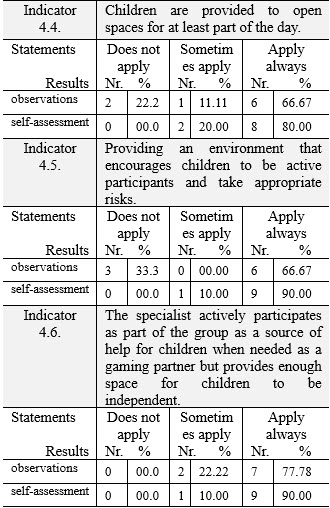
Table 30. Principle 5: The environment encourages each child’s sense of belonging.
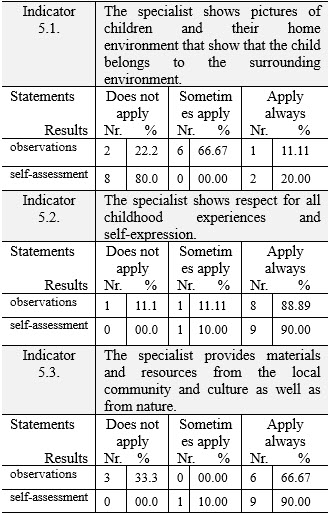
Table 31. Principle 1: Knowledge of children’s development and learning contributes to the quality of early childhood experiences.
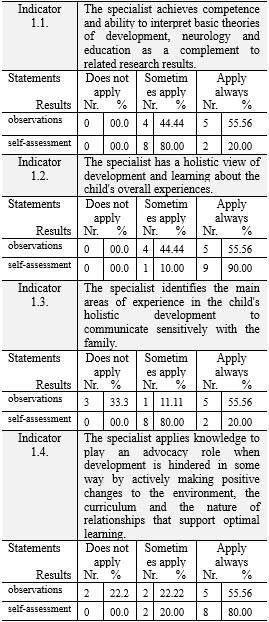
Table 32. Principle 2: Continuous participation in professional development activities improves the quality of practice.
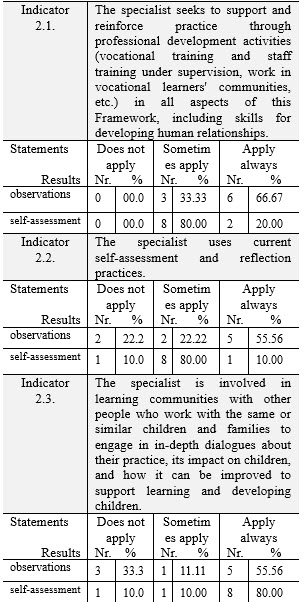
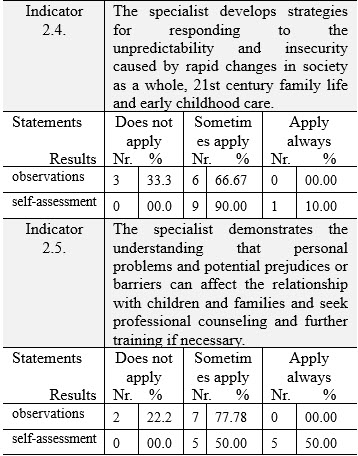
Table 33. Principle 1: Interaction and cooperation with other professionals and services in the same and / or different sectors, such as ensuring privacy, confidentiality and dignity of children and families, improving the quality of service delivery.
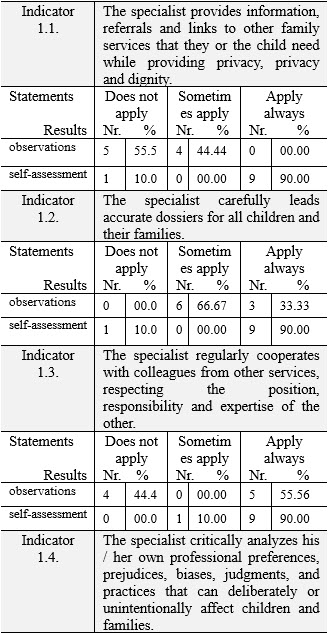
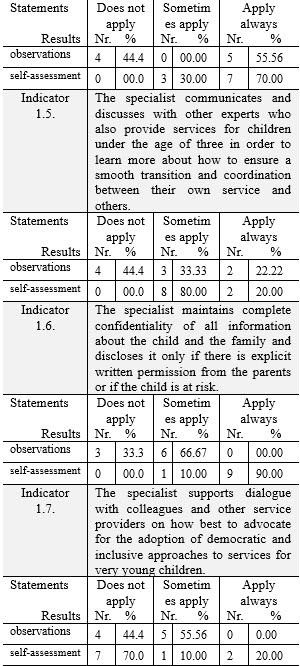
Table 34. Principle 2: Consultation with an Early Child Diagnostic Specialist for formal screening and assessment where necessary prevents multiple developmental delays and atypical behaviors later in life.
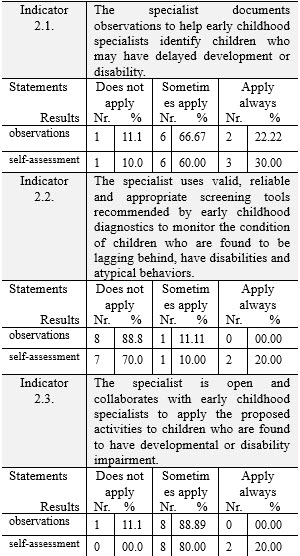
Identified as the first priority in the “Quality Framework for Early Childhood Services” (QFECS), Area 1 “Relationships” emphasizes that social relations are at the heart of the development of children under the age of three. The principles of adjoining indicators laid down in this area affirm that “the enrichment of children’s relationships and emotional experiences, the absorption of social norms, the stimulation of self-awareness are basic structural components of the child’s social development” (Derrijan and Valchev, 2015: 36).
The presented results of the surveyed priority area reveal that responsive, equitable and equal interactions have been developed in the Jesuit groups under investigation. The high degree of their manifestation is revealed by the statements made in the Daily Self-Assessment Report of the members of the cluster teams participating in the study.
Relatively close, the values of observations and self-assessment in the column “Applying permanently” are an expression of the conscious aspirations of professionals to promote relationships with the child that support their initiative in the process of communication - see “Relationships”: Principle 1, Indicators 1.2 , 1.5; Principle 2, Indicators 2.1, 2.3, 2.4; Principle 3, Indicators 3.2, 3.4; Principle 5, Indicators 5.1, 5.2.
The results that reflect the highlighted statements in the “Partially applied” column should also be disregarded. Their presence is an indicator that definitely signals the still dominant attitudes of some of the team’s cluster representatives that their role is only related to meeting the underlying needs of the child in the middle age. This observation highlights that institutional care professionals need targeted work to promote the under-standing that “the earliest social task is at-tachment” (Tasevska, 2014: 39).
The indicators in Area 2 “Family and Community” focus on the quality of early childhood services that ensure a climate of tolerance and dialogue between the institution’s and the family’s representatives.
The results of the survey show that monitoring scores compared to self-assessment of crèche representatives overlap to a high degree - see Principle 2 “Sensitive, respectful, and equal family communication supports the development and learning of children.”
By itself, this fact reveals the already formed attitudes of the representatives of the cluster teams to communicate with families in ways that show respect and appreciation, as well as to jointly discuss all decisions about the development, well-being and learning of their children.
The results reflecting Principle 3 “Services are best provided in partnership with the family” and Principle 4 “Partnerships based on cooperative and community-based cooperation best support families and children” reveal discrepancies in the “Daily Surveillance Report” and in the “Daily self-assessment report”. Their analysis is the basis for the following conclusions:
- Clearly cluster teams take action to implement an institutional policy related to the transformation of “working with the family” into “interacting with parents.” We find a testimony in the highlighted responses to the Families and Community indicators, Principle 3, Indicators 3.1, 3.2, 3.4, 3.5;
- there are still no practices that ensure “safe transition” where specialists can “negotiate with different services to support families” - see Family and Community, Principle 4, Indicator 4.1;
- despite the theoretical preparedness of the cluster staff, there is still insufficient use of “opportunities for members of the community involvement and participation in early childhood services “- see Family and Community, Principle 4, Indicators 4.2 and 4.3.
This task “is complicated by the fact that an individual approach is necessary, which in turn makes the standardization method virtually impossible” (Biletska, 2017: 66), ie the theoretical preparedness of the specialists depends on the level of their professional reflexive competence.
Undoubtedly, the Principles in the Third Priority Area “Inclusiveness, Diversity and Values of Democracy”, correspond directly to the indicators of the first and second priorities of the “Quality Framework for Early Childhood Services” (QFECS).
Confessing the values of democracy by all actors in the childcare care interactions up to the age of 3 are a strong indicator of a change in the provision of services in crèches.
The qualitative analysis of responses from the Third Priority Area reveals the following more significant summaries:
- the prevailing answers in the “Partial Apply” and “Applying Permanently,” both marked in both the Daily Surveillance Report and the Daily Re-Port for Self-Assessment, reveal the unbalanced implementation of activities that ensure the promotion of the right of every child and his /her family be included, respected, appreciated - see area “Inclusion, diversity and values of democracy”, Principle 1, Indicators 1.1, 1.3, 1.4; Principle 2, Indicators 2.1, 2.3, 2.4; Principle 3, indicators 3.2, 3.3, 3.5; Principle 4, Indicators 4.1, 4.3, 4.4;
- the identified partiality in this direction unambiguously reveals the need to upgrade the competencies of the cluster teams in areas that are definitely important for enhancing the quality of early childhood services - see “Inclusion, Diversity and Values of Democracy,” Principle 2, Indicators 2.1, 2.2, 2.3; Principle 3, indicators 3.2, 3.3, 3.5; Principle 4, Indicators 4.1, 4.3, 4.4;
- it is positively commented on the fact that they are marked in this way (mostly in the “Partially applied” and “Applying permanently” scales), the responses to the study reveal the “awareness” of the key weight of the period from 0 to 3 years for the development of all the identities of the child - see area “Inclusion, diversity and values of democracy”, Principle 3, Indicators 3.1, 3.2, 3.3 and 3.4.
It can be summed up that the results of the monitoring program in this priority area reveal the readiness of the clergy specialists to formulate clearer organizational messages regarding their professional inclusion in the social and emotional adaptation of the children of the elderly.
At first reading, the Fourth Priority Area of the “Quality Framework for Early Childhood Services” (QFECS) suggested results that would not give rise to any doubts about the quality of health, well-being and nutrition services for children under 3 years of age.
A deeper analysis of the survey results reveals inconsistencies in the marked responses from the monitoring and the members of the cluster teams.
In fact, “Claiming Health” is the most consistently highlighted in applying Principle 1 “Every child’s health is being promoted” - a result that is reflected in Indicators 1.1, 1.2, 1.3, 1.4, 1.5, 1.6, 1.7, 1.8.
The results recorded in Principle 2, Principle 3 and Principle 4 show fluctuations in the extent to which they are applied: they mainly vary between “Partially applied” and “Not applicable” (see area 4 - Principle 2, Indicators 2.1, 2.2, 2.3 , 2.4, 2.5, 2.6, Principle 3, Indicators 3.1, 3.3, 3.4, 3.5, Principle 4, Indicators 4.1, 4.2, 4.3 and 4.4).
There are also contradictions in the results reported in the Daily Survey Survey and the Daily Self-Assessment Report - Principle 2, Indicators 2.1, 2.2, 2.3, 2.4, 2.6; Principle 3, Indicators 3.1, 3.3, 3.4 and Principle 4, Indicator 4.2.
These contradictions focus attention on the need to rethink the process of interaction towards the understanding that:
- health and nutrition with children under the age of 3 are an integral part of creating affection;
- the affection of the child under the age of 3 is a dynamic process that requires the continuous creation of close and positive interactions during nutrition and care.
An important part of supporting children under the age of 3 is to master procedures for giving recommendations to families when children show signs of atypical behavior, depression or anxiety. The analysis of the results in this context unambiguously shows that “joint engagement in this process requires, besides recognition and acceptance, also readiness to discuss differences of opinion and to deal with everyday problems” (Vitanova and Miteva, 2017: 201)
Undoubtedly, the Fifth Priority Area is extremely important in the Quality Framework for Early Childhood Services. Development and learning are the synchronized process that allows the potential of the child under the age of 3 to be unleashed.
The marked responses in the “Daily re-port for self-assessment” are mostly in the highest scale of the “Applying permanently” scale - see Development and Learning, Principle 1, Indicators 1.1, 1.2, 1.3, 1.4; Principle 2, Indicators 2.1, 2.4, 2.5; Principle 3, Indicators 3.1, 3.2, 3.4, 3.5; Principle 4, Indicators 4.1, 4.2, 4.3. 4.4.
On the other hand, the dynamics in the responses from the “Daily Surveillance Report” deprives the credibility of the registered indicative components by the cluster teams, given that the monitoring expert predominantly notes the claims in the “Partially applied” and “Not applicable” columns - see Development and Learning Area, Principle 1, Indicators 1.1, 1.3, 1.4; Principle 2, Indicators 2.1, 2.2, 2.3, 2.4, 2.5, 2.6; Principle 3, Indicators 3.3, 3.4, 3.5; Principle 4, indicators 4.1, 4.2, 4.3, 4.4.
This finding draws attention to a relatively high percentage amongst the cluster members who are sufficiently aware that care must always be approached as opportunities.
Nevertheless, it turns out that practitioners do not have the specific competencies necessary for “situations in which, when playing, the child exhibits his abilities and personal qualities, inspired by the experience and gaining on his basis new own experience” (Dimitrova, 2017: 33) to make the most of them for development, learning and well-being for the child under 3 years of age.
“Surveillance and Documentation” (Sixth Priority Area in R & DD) is the basis for adults to be open and to build relationships with babies and very young children.
There is a growing recognition that systematic “monitoring and documentation” of the well-being of children under the age of 3 determines the planning of new learning practices, the adaptation of the environment as well as the refinement of timetables, activities and adaptation of care needed for early childhood development.
These regularities underline the importance of the Sixth Priority Area in providing quality services in early childhood. There are again inconsistencies in the classification of these statements.
Representatives of the cluster teams have their answers mostly in the “Applying permanently” scale against the “Part-Apply” and “Non-Applicable” responses marked by the Expert-Monitoring - see Section 6, Principle 1, Indicators 1.1, 1.3, 1.4; Principle 2, Indicators 2.1, 2.2, 2.3, 2.4; Principle 3, Indicators 3.1, 3.2, 3.3, 3.4; Principle 4, indicators 4.1, 4.2 and 4.3.
It can be summed up that data in the “Daily Surveillance Report” and in the “Daily Self-Assessment Report” reveals the objectively binding of the observed indicator components in the marked answers. Their analysis is in the direction of the different starting points that respondents place in the focus of their attention:
- Certainly the representatives of the cluster teams, in the capacity of medical specialists, carry out systematic observations and document the actual health status of each child, which explains the claims in the degree “Applying permanently”;
- as a pedagogical specialist, the monitoring expert focuses on the essentials in the documentation and planning process: as a way to take into account the progress of the child in the interactions that explains the claims in the “Partial Apply” and “Not Applicable” assumptions.
It is objectively appreciated that positive changes are reported in the efforts of the cluster teams to respond to the need for close relationships with parents. A testimony in this direction is the sharing of analyzes of the instrument used to evaluate child achievement - the child’s portfolio - used in the three clergy groups.
Undoubtedly, the Seventh priority area of the “Quality Framework for Early Childhood Services” (QFECS) has accumulated the highest number of matches in the registered results from the cluster teams and the monitoring expert. The observed similarities of the reported statements are observed in the separate 5 principles and their corresponding indicators.
Since the indicators of a safe, healthy and supportive environment are meaningful, the high values of the positive response are a clear indicator of the validation of the appropriate choice in the organization of the environment in the study groups.
This result corresponds directly to the quality of services in the early childhood and is a reliable source for the following summaries:
- cluster teams maintain a physical and emotional environment that minimizes conflicts among young children - see Priority Area “Supporting Circles”, Principle 1, Indicators 1.1, 1.2, 1.3, 1.4, 1.5;
- cluster teams provide sufficient resources to stimulate all areas of child development - see Priority Area “Supporting Circles”, Principle 4, Indicators 4.2 and 4.3;
- the blind teams are aware of the cru-cial role of a supportive environment that develops a sense of belonging to the child up to the age of 3, Principle 5, indicator 5.2.
The complexity and complexity of the indicators under discussion in this priority area requires the following statement: additional care is needed for the specialists in the cleric groups to use appropriate pedagogical interventions in the course of interactions with the child under the age of 3 (see Seventh area, Principle 2, Indicator 2.3, Principle 3, Indicators 3.1, 3.4, Principle 5, Indicators 5.1, 5.3).
In this direction for the pedagogy of early childhood there is a sufficiently large array of studies devoted to the psychological characteristics of children. It is their age-specificity that argued that “authoritarian educational methods and normative directives a priori can not be dominant at this age and can not determine the child’s invisible and visible self-esteem” (Yanakieva, 2014).
The principles included in the Eighth Priority Area focus on the link between the quality of services provided by children under the age of three and the level of training and professional development of adults working with them. The indicators that “illuminate” this relationship are sufficiently eloquent to reflect the current state of the respondents in this study.
Coincidences in the claims marked in the Daily Surveillance Report and in the Daily Self-Assessment Report are clearly noticed - see “Professional Development”, Principle 1, Indicator 1.1, 1.2; Principle 2, Indicator 2.1, 2.2, 2.3, which reveals the attitudes of the teams scrutinized to increase their competencies towards addressing the specific needs of the child under the age of 3.
However, the reported contradictions in Principle 1, Indicators 1.3, 1.4 and Principle 2, Indicators 2.4, 2.5 - a finding pointing to the fact that there are still some specialists accompanying children under the age of 3 who “Do not think that it is necessary to continually analyze and enrich their own teaching experience” (Stošić and Stošić, 2013).
It is obvious that adults working with children under 3 years need a toolbox that:
- allows identification of main areas and experience in the child’s holistic development in order to communicate sensitively with families;
- requires an advocacy role when development of the child is hindered in any way; help develop strategies to respond to the unpredictability and insecurity caused by rapid changes in society as a whole in family life in the 21st century.
The 9th priority Area “Cross-sectoral cooperation” draws attention to the need to apply the multidisciplinary approach in early childhood. Naturally, this process needs knowledge that goes some way beyond the professional competence of adults accompanying a child from 0 to 3 years.
The results in the attached tables (No. 32 and No. 33) outline the tendency for sufficiently active and searching behavior of the teams of the groups in this direction. The presented ratios are a demonstration of the maturity and responsibility of the participants about the irreversible sensitivity of the age period and the maximum utilization of the internal conditions for development of the child created by this sensitivity.
Registered answers in the “Partially applied” and “Not Applicable” roles - see Nine Fields, Principle 1, Indicators 1.1, 1.4, 1.6, 1.7; Principle 2, indicators 2.2, 2.3. 2.4, 2.5 and 2.6, reveals the difficulty of the cluster teams:
- to provide care and support services to children and their families during critical early childhood periods;
- to use valid, reliable and appropriate screening tools recommended by early childhood diagnostics to monitor the condition of children;
- to maintain a trust relationship with the families of children with developmental delays, in order to obtain up-to-date information as part of the ongoing evaluation process;
- to ensure a smooth transition in the establishment of a network of relations to ensure partnership with institutions and non-governmental organizations (NGOs).
The results of the study, which is related to the issue of early childhood well-being in the institutional care system, reveal deficiencies resulting from:
- applying still inertial patterns of interactions with children and their families;
- unjustified, partial and therefore ineffective structuring of a unified strategy for the functioning of the CSS;
- sporadic, partial and fragmentary attempts to transform institutional care policies into early childhood.
Undoubtedly, the principles and indicators differentiated in the Nine Priority Areas of the Applied Framework outline the essence of the relationship and meaning of care with children from birth to 3 years. Formulated metrics make it possible to specify the steps in the process of their creation, deployment and maintenance. It can be conclusively concluded that its use impersonates “the necessity for educational results in the shape of competence as an indicator of human capital” (Tsankov, 2018: 69).
In this regard, the objective analysis of the results obtained from the “Quality Framework for Early Childhood Services” (QFECS) in the three clerical groups reveals a priori its reflected reflexion, causing proactive (conscious) striving for quality services at all levels. It is precisely this inductive feature that nominates the Framework as a reliable and robust tool for enhancing the quality of early childhood services.
The presented study was carried out as part of an international study on the implementation of the “Quality Framework for Early Childhood Services” initiated by the ISSA (International Steps by Step) Association.
Conflict of interests
The author declares no conflict of in-terest.
Biletska, М. (2017). Principi j metodologіchnі pіdhodi do rozvitku pam’iatі v navchalьnіj dіialьnostі [Principles and methodological approaches to the memory development in educational activities]. Scientific herald of Melitopol State Pedagogical University. Series: Pedagogy. No 1. p. 60-67. http://dx.doi.org/10.7905/nvmdpu.v0i18.1890
Dyankova, G. (2018a). Tolerantnost v delnichnost i praznichnost. Metodicheski algoritym za neformalno obrazovanie i inovativni profesionalni umeniia na uchitelia za mezhduetnicheska tolerantnost v detskata gradina. [Tolerance in daytime and festivity, methodical algorithm for non-formal education and innovative professional skills for interethnic tolerance in the kindergarten]. Farago, Sofia, p. 96.
Dyankova, G. (2018b). Research of cognitive exchange Dyankova, G. (2018). Research of cognitive exchange specifics in teachers academic training. International Journal of Cognitive Research in Science, Engineering and Education, 6(3). https://doi.org/10.5937/ijcrsee1803001D
Derijan, I. & Valchev, G. (2015). Determinanti na deficitarnoto razvitie pri deca, lisheni ot roditelski grizhi. [Determinants of deficits in the development in children deprived of parental care], BSU, Center for Humanities, issue 1, pp.35-45. Retrieved from http://research.bfu.bg:8080/jspui/handle/123456789/727
Dimitrova, Zl. (2017). Proekcii na animativniia podhod v pedagogikata. [Projections of the animation approach in pedagogical sciense], Education and tehnologies, 8, pp. 33-37. Retrieved from http://www.edutechjournal.org/wp-content/uploads/2017/09/8_1__33-37.pdf
EC—European Commission. (2011). Early childhood education and care: providing all our children with the best start for the world of tomorrow. Brussels, European Commission [COM (2011) 66 final], available at: http://ec.europa.eu/assets/eac/education/policy/strategic-framework/archive/documents/ecec-quality-framework_en.pdf
European commission (2014). Early childhood edu-cation and care 2014. [Eurydice Policy Brief], Education, Audiovisual and Culture Executive Agency, p. 34. https://publications.europa.eu/en/publication-deail/-/publication/25c63f11-c2cb-4c4c-a3cb-85d9b1eab93b/language-en/format-PDF/source-search
European commission (2011), COMMUNICATION FROM THE COMMISSION Early Childhood Education and Care: Providing all our children with the best start for the world of tomorrow, [European commission, Brussels,17.02.2011], p.11. https://eur-lex.europa.eu/LexUriServ/LexUriServ.do?uri=COM:2011:0066:FIN:EN:PDF
Green, B., C. Ayoub, J. DymBartlett, A. Ende, C. Furrer, R. Chazan-Cohen, C. Vallotton, J. Klevens (2014). The effect of Early Head Start on child welfare system involvement: A first look at longitudinal child maltreatment outcomes, Children and Youth Services Review, 42, July 2014, Pages 127-135. https://doi.org/10.1016/j.childyouth.2014.03.044
Kaleynska, Т. (2014). Children and Inclusion – European standards and community implementation. Challenges in Building Child Friendly Communities. University of Osijek and Еvropski dom, Slavonski Brod, Zadar, Croatia, pp. 124-130. Retrieved from http://da.uni-vt.bg/pubinfo.aspx?p=11182
Mihova, M. (2012). Preduchilishtnoto obrazovanie prez prizmata na evropejskata i nacionalnata obrazovatelna politika. [Preschool education in the light of european and national policy], 130 years of pre-school education in Bulgaria, University Publishing House St. St. Cyril and Methodius, Veliko Tyrnovo, pp.122-127. Retrieved from http://da.uni-vt.bg/pubinfo.aspx?p=13321
OECD (2012). Starting Strong III - A Quality Toolbox for Early Childhood Education and Care, http://www.oecd.org/education/school/startingstrogiii-aqualitytoolboxforearlychildhoodeducationandcare.htm
Stošić, L., & Stosic, I. (2013). Diffusion of innovation in modern school. International Journal of Cognitive Research in Science, Engineering and Education:(IJCRSEE), 1(1), 5-13. Retrieved from http://www.ijcrsee.com/index.php/ijcrsee/article/view/219
Tasevska, D. (2008). SOS Semejstva v kriza, psihologicheska podkrepa na disfunkcionalni semejstva za efektivno roditelstvo. [SOS Families in crisis, psychological support of dysfunctional families for effective parenting]. University Publishing House St. St. Cyril and Methodius, Veliko Tyrnovo, p. 12.
Tasevska, D. (2014). Obrazovanie za ravni prava. [Education for Equal Rights]. University Publishing House St. St. Cyril and Methodius, Veliko Tyrnovo, p. 39.
Tsankov, N. (2018). The transversal competence for problem-solving in cognitive learning. International Journal of Cognitive Research in Science, Engineering and Education, 6(3). pp. 67-82. https://doi.org/10.5937/ijcrsee1803067T
Vitanova, N. & Miteva, N. (2017) Team teaching i/ili Co-teaching v konteksta na priobshtavashtoto i interkulturnoto obrazovanie. [Team Teaching and/or Co-Teaching in the Context of Inclusion and Intercultural Education], Strategies for Policy in Science and Education, 25(2) pp.190-208. Retrieved from https://azbuki.bg/editions/journals/329-staregies/sonparticles2016-2/2882-
Yanakieva, E. (2014) Detskoe schastьe kak pedagogicheskaia cennostь [Children’s happiness as pedagogical value], A science. Thought: electronic periodic journal. Retrieved from https://cyberleninka.ru/article/n/detskoe-schastie-kak-pedagogicheskaya-tsennost-1
Corresponding Author
Dr. Sofiya Dermendzhieva, South-West University “Neofit Rilski” - Blagoevgrad, Bulgaria,
E-mail: sofger@swu.bg

This work is licensed under a Creative Commons Attribution - NonCommercial - NoDerivs 4.0 The article is published with Open Access at www.ijcrsee.com